
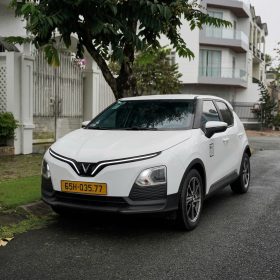
 xe 4 chỗ
 xe 7 chỗ
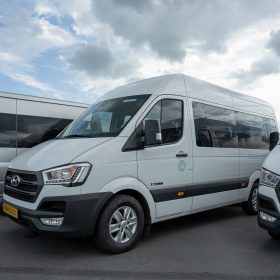 xe 16 chỗ
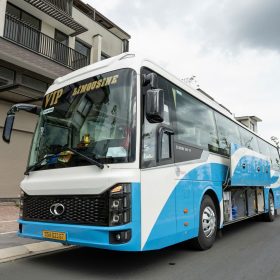 xe 29 chỗ
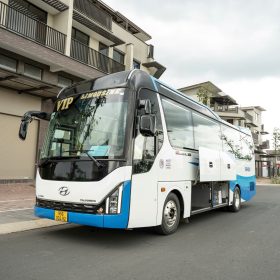 xe 45 chỗ
 xe 4 chỗ
New Zealand has been described as a middle power in the Asia-Pacific region, and an emerging power. A seasonal workers scheme for temporary migration was introduced in 2007, and in 2009 about 8,000 Pacific Islanders were employed under it. New Zealand has a strong presence among the Pacific Island countries, and enjoys strong diplomatic relations with Samoa, Fiji, and Tonga, and among smaller nations. Despite the United States’s suspension of ANZUS obligations, the treaty remained in effect between New Zealand and Australia, whose foreign policy has followed a similar historical trend. In 1951, the United Kingdom became increasingly focused on its European interests, while New Zealand joined Australia and the United States in the ANZUS security treaty. On 3 September 1939, New Zealand allied itself with Britain and declared war on Germany with Prime Minister Michael Joseph Savage proclaiming, “Where she goes, we go; where she stands, we stand”.
The British and Irish immigrants brought aspects of their own culture to New Zealand and also influenced Māori culture, particularly with the introduction of Christianity. As of 2022, the agency is New Zealand’s largest employer, consolidating the DHBs’ combined work force of 80,000, with an estimated annual operating budget of NZ$20 billion and an asset base of about NZ$24 billion. The New Zealand Government established it to replace the country’s 20 district health boards (DHBs) on 1 July 2022.
Non-Māori Polynesian cultures are also apparent, with Pasifika, the world’s largest Polynesian festival, now an annual event in Auckland. Immigrants from India, China and the Philippines are the largest contributors to New Zealand’s population growth. New Zealand is a predominantly urban country, with 84.5% of the population living in urban areas and 51.4% in the seven cities with populations exceeding 100,000. In 1921, the country’s median centre of population was in the Tasman Sea west of Levin in Manawatū-Whanganui; by 2017, it had moved 280 km (170 mi) north to near Kawhia in Waikato.
Contents
The New Zealand Post Office had a monopoly over telecommunications in New Zealand until 1987 when Telecom New Zealand was formed, initially as a state-owned enterprise and then privatised in 1990. Railways run the length of the country, although most lines now carry freight rather than passengers. The state-owned enterprise KiwiRail now operates the railways, with the exception of commuter services in Auckland and Wellington, which are operated by Auckland One Rail and Transdev Wellington respectively. State-owned Transpower operates the high-voltage transmission grids in the North and South Islands, as well as the Inter-Island HVDC link connecting the two together.
A 2017 human rights report by the United States Department of State noted that the New Zealand government generally respected the rights of individuals, but voiced concerns regarding the social status of the Māori population. New Zealand’s geographic isolation for 80 million years and island biogeography has influenced evolution of the country’s species of animals, fungi and plants. Snowfall is common in the eastern and southern parts of the South Island and mountain areas across the country.
Almost all general elections between 1853 and 1993 were held under the first-past-the-post voting system. Cabinet, formed by ministers and led by the prime minister, is the highest policy-making body in government and responsible for deciding significant government actions. If no majority is formed, a minority government can be formed if support from other parties during confidence and supply votes is assured. The House of Representatives is democratically elected, and a government is formed from the party or coalition with the majority of seats. The New Zealand Parliament holds legislative power and consists of the king and the House of Representatives.
- The next year, in 1643, Hendrik Brouwer proved that the South American land was just a small island, and Dutch cartographers subsequently renamed Tasman’s discovery Nova Zeelandia from Latin, after the Dutch province of Zeeland.
- In the same year as Cook’s first visit, French explorer Jean de Surville conducted the first Christian service in New Zealand waters on Christmas Day.
- These conflicts, mainly in the North Island, saw thousands of imperial troops and the Royal Navy come to New Zealand and became known as the New Zealand Wars.
- The largely rural life in early New Zealand led to the image of New Zealanders as rugged, industrious problem solvers.
- The tallest peak on North Island is Mount Ruapehu (2,797 m), an active, cone-shaped volcano.
- Welcome to New Zealand – Tourism.org.nz is your gateway to discovering the stunning beauty and vibrant culture of Aotearoa, New Zealand.
- What makes New Zealand a unique country to travel to?
The currency is the New Zealand dollar, informally known as the “Kiwi dollar”; it also circulates in the Cook Islands (see Cook Islands dollar), Niue, Tokelau, and the Pitcairn Islands. New Zealand has an advanced market economy, ranked 16th in the 2022update Human Development Index, and fourth in the 2022update Index of Economic Freedom. It has contributed forces to several regional and global peacekeeping missions, such as those in Cyprus, Somalia, Bosnia and Herzegovina, the Sinai, Angola, Cambodia, the Iran–Iraq border, Bougainville, East Timor, and the Solomon Islands. In addition to Vietnam and the two world wars, New Zealand fought in the Second Boer War, the Korean War, the Malayan Emergency, the Gulf War, and the Afghanistan War.
From the geothermal wonders of Rotorua and the serene beaches of Coromandel to the majestic peaks of Fiordland and Mt Cook, every region offers its own unique charm. Experience the Bay of Islands and cruise through Northland’s Hole the in Rock. Explore the beauty and diversity of New Zealand through its stunning destinations.
The colony gained a representative government in 1852, and the first Parliament met in 1854. These conflicts, mainly in the North Island, saw thousands of imperial troops and the Royal Navy come to New Zealand and became known as the New Zealand Wars. New Zealand was administered as a dependency of the Colony of New South Wales until becoming a separate Crown colony, the Colony of New Zealand, on 3 May 1841. In 1835, following an announcement of impending French settlement by Charles de Thierry, the nebulous United Tribes of New Zealand sent a Declaration of Independence to King William IV of the United Kingdom asking for protection. The Māori population declined to around 40% of its pre-contact level during the 19th century; introduced diseases were the major factor. Following Cook, New Zealand was visited by numerous European and North American whaling, sealing, and trading ships.
Its exclusive economic zone is one of the world’s largest, covering more than 15 times its land area. The nearest continent is Australia to the west north west, with the shortest distance between the Australian and New Zealand mainlands being roughly 1,487 kilometers (924 miles) across the Tasman Sea, specifically between Tasmania and Fiordland. In 1947, New Zealand adopted the Statute of Westminster, confirming that the British Parliament could no longer legislate for the country without its consent. In 1886, New Zealand annexed the volcanic Kermadec Islands, about 1,000 km (620 mi) northeast of Auckland. Following these armed conflicts, large areas of Māori land were confiscated by the government to meet settler demands. Armed conflict began between the colonial government and Māori in 1843 with the Wairau Affray over land and disagreements over sovereignty.
New Zealand is a member of the Five Eyes intelligence sharing agreement, known formally as the UKUSA Agreement. Today, New Zealand enjoys particularly close relations with the United States and is one of its major non-NATO allies, as well as with Australia, with a “Trans-Tasman” identity between citizens of the latter being common. The country is a member of the United Nations, the Commonwealth of Nations and the Organisation for Economic Co-operation and Development (OECD), and participates in the Five Power Defence Arrangements.
Regions and external territories
Europeans did not revisit New Zealand until 1769, when British explorer James Cook mapped almost the entire coastline. The existence of a single great fleet that settled New Zealand has since been superseded by the belief that the majority of settlement was a planned and deliberate event that occurred over several decades. The New Zealand Geographic Board discovered in 2009 that the names of the North Island and South Island had never been formalised, and names and alternative names were formalised in 2013. In 1834, a document written in Māori, “He Wakaputanga o te Rangatiratanga o Nu Tireni”, was translated into English and became the Declaration of the Independence of New Zealand. The Realm of New Zealand also includes Tokelau (a dependent territory); the Cook Islands and Niue (self-governing states in free association with New Zealand); and the Ross Dependency, which is New Zealand’s territorial claim in Antarctica.
CountryReports YouTube Channel:
From the early 19th century, Christian missionaries began to settle New Zealand, eventually converting most of the Māori population. Some Māori later migrated to the Chatham Islands, where they developed their distinct Moriori culture; a later 1835 invasion by Māori iwi resulted in the massacre and virtual extinction of the Moriori. The first people to reach New Zealand were Polynesians in ocean going waka, who are believed to have arrived in several waves between about 1280 and 1350. Similarly the Māori and English names for the whole country are sometimes used together (Aotearoa New Zealand); however, this has no official recognition. For each island, either its English or Māori name can be used, or both can be used together.
Military
The 1923 and 1926 Imperial Conferences decided that New Zealand should be allowed to negotiate its own political treaties, and the first commercial treaty was ratified in 1928 with Japan. During the period of the New Zealand colony, Britain was responsible for external trade and foreign relations. The Ross Dependency is New Zealand’s territorial claim in Antarctica, where it operates the Scott Base research facility.
In September 2020 Statistics New Zealand reported that the population had climbed above 5 million people in September 2019, according to population estimates based on the 2018 census.n 9 The road and rail networks in the two main islands are linked by roll-on/roll-off ferries between Wellington and Picton, operated by Interislander (part of KiwiRail) and Bluebridge. In the year to June 2018, dairy products accounted for 17.7% ($14.1 billion) of total exports, and the country’s largest company, Fonterra, controls almost one-third of the international dairy trade. The increase of this since the 1960s led to the formation of the Pasifika New Zealander pan-ethnic group, the fourth-largest ethnic grouping in the country.
- The currency is the New Zealand dollar, informally known as the “Kiwi dollar”; it also circulates in the Cook Islands (see Cook Islands dollar), Niue, Tokelau, and the Pitcairn Islands.
- Non-Māori Polynesian cultures are also apparent, with Pasifika, the world’s largest Polynesian festival, now an annual event in Auckland.
- How big is the New Zealand economy?
- The main ski field in the North Island is Mt Ruapehu, and off season, the town of Ohakune is a great hub for Mountain Biking and hiking.
- Vineyards have proliferated since the 1990s in areas of the country, with a focus on high-quality sauvignon blanc and pinot noir.
- The country is a member of the United Nations, the Commonwealth of Nations and the Organisation for Economic Co-operation and Development (OECD), and participates in the Five Power Defence Arrangements.
New Zealand nationality law treats all parts of the realm equally, so most people born in New Zealand, the Cook Islands, Niue, Tokelau, and the Ross Dependency are New Zealand citizens.n 8 Because of financial pressures and the desire to consolidate railways, education, land sales, and other policies, government was centralised and the provinces were abolished in 1876. According to the Ministry of Justice, Māori are overrepresented, comprising 45% of New Zealanders convicted of crimes and 53% of those imprisoned, while only being 16.5% of the population. As of 2023,update the country is ranked second in the strength of its democratic institutions, and third in government transparency and lack of corruption. The supremacy of parliament over the Crown and other government institutions was established in England by the Bill of Rights 1689 and has been ratified as law in New Zealand.
But unresolved disputes over land ownership and sovereignty led to a series of armed clashes, known as the Maori Wars, the NZ Wars, or the Land Wars, which continued until 1872. The Treaty of Waitangi was concluded between the British government and Maori chiefs in early 1840. The first Europeans to live in New Zealand were seamen who jumped ship, convicts who had escaped from British penal colonies in Australia, sealers, whalers, and traders. In the same year as Cook’s first visit, French explorer Jean de Surville conducted the first Christian service in New Zealand betista casino login waters on Christmas Day. He recognized the relationship between the Maori and the Tahitian people his expedition had already visited. This was changed by Dutch cartographers to Nova Zeelandia, after the Dutch province of Zeeland.
Properly Title and Flair Your Post
The two main islands are named North and South islands in English, or Te-Ika-a-Maui and Te Wai Pounamu, respectively, in Maori. Discover vibrant cities like the largest city Auckland and capital city Wellington, where culture and entertainment thrive. New Zealand is about 1,000 miles (1,600 km) long (north-south) and about 280 miles (450 km) across at its widest point. New Zealand was the largest country in Polynesia when it was annexed by Great Britain in 1840. Participation in the world wars gave some New Zealand writers a new perspective on New Zealand culture and with the postwar expansion of universities local literature flourished.
Because of its far-flung outlying islands and long coastline, the country has extensive marine resources. Since 1937, the islands are uninhabited except for about six people at Raoul Island station. In 1830, mapmakers began to use “North” and “South” on their maps to distinguish the two largest islands, and by 1907, this was the accepted norm. Māori had several traditional names for the two main islands, including Te Ika-a-Māui (‘the fish of Māui’) for the North Island and Te Waipounamu (‘the waters of greenstone’) or Te Waka o Aoraki (‘the canoe of Aoraki’) for the South Island.
