
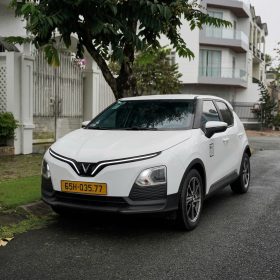
 xe 4 chỗ
 xe 7 chỗ
 xe 16 chỗ
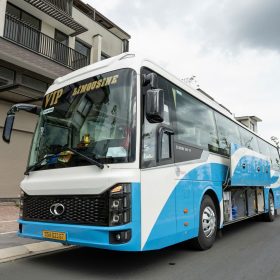 xe 29 chỗ
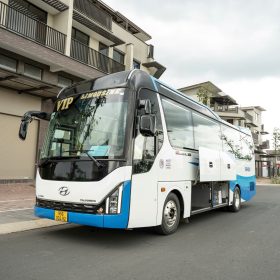 xe 45 chỗ
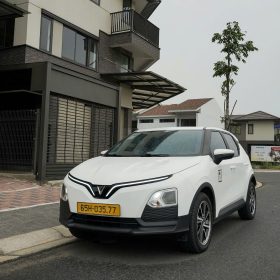 xe 4 chỗ
I moved the system dataset to the boot pool. I don’t move any data, no apps are running, this is a vanilla Scale install so far, yet the HDD is in constant work. 1 SSD to boot and 1 HDD to store data. Agree, I have used SeaChest with good results for this same issue on scale plus drive cache. If you do it on a live pool, I’d back up your data first.
- The NVMe interface is also extensible to allow operating over the network (where it is known as NVMe Over Fabric or NVMe-oF).
- However, if a disk has died entirely, or a slot is empty, it might not have a device name.
- The other slight annoyance when setting the idle3 timer on WD drives is that changes only take effect when the drive is powered on, usually meaning the host computer must be fully shut down and started back up for any changes to be seen- this makes experimentation to determine how raw timer values are interpreted a slower and more tedious process.
- The Prometheus Node Exporter is the canonical tool for capturing machine metrics like utilization and hardware information with Prometheus, but it alone does not support probing SMART data from storage drives.
- When it comes to long-term data storage, there are several strategies and media types that Redditors recommend.
- For the system I’m monitoring here, the SSD that it boots from has a wearout indicator sitting on 95 of 100 (only 5% of the rated life consumed), visibly unchanged for a long time so it’s not very interesting as an example.
Below we will discuss exactly how to do this with FreeBSD’s sesutil or the management tools for your HBA. Though a truism, it bears emphasizing that with a little planning, management and maintenance of storage systems can be made easier and safer. The total throughput possible from the connected disks is still limited by the number of lanes available, but this is likely the best approach in systems with more than a dozen disks.
Help & Info about AnyDesk for Windows
At somewhat larger scales, a number of drives can be connected directly to a SAS (or SATA) controller PCIe card. But, if the number of ports on the motherboard is sufficient to your needs, this is the easiest way to connect the drives to the system. We are going to focus on some of the most popular for SATA and SAS drives.
- Simply installing the apps and choosing a pool for k3s and docker creates a dataset and logs.
- My Seagate Exos enterprise drives make almost 0 noise actually.
- While I have been aware of this in my home server as well, it is easy to forget to ensure that disks are not silently killing themselves by cycling the heads.
- Of particular note, WD Green drives ship configured to park the heads after only 8 seconds of inactivity which could notionally wear out the disk in a matter of months if the heads are cycling more-or-less continuously!
- View an ad to download for free
Western Digital idle3
I will optimize settings later for the security/quietness tradeoff however, I’m very pleased with it for now. How can I set this value on the Truenas interface? Keeping it spinning but not accessing data is safer. I would still recommend against idling your drive as that reduces longevity. I also set the tunable vfs.zfs.txg.timeout to a somewhat large value so the regular syncs don’t happen every 5 seconds.
OpenZFS Development & Support
I noticed that even when doing nothing, I hear the sound of drives working every few seconds. I gave up and just built a Windows Storage Space with tiering and the drives are now effectively silent. I guess it depends on the drives, but don’t think you’ll find any software solution. My Seagate Exos enterprise drives make almost 0 noise actually. The system is never idle really, it’s a server. What causes the constant load on the disk?
AnyDesk Remote Desktop
FreeBSD’s sesutil is a tool to interface with the SES devices on your system. You should also configure smartd to monitor your disks and send you alerts, which may give you advanced notice when a drive is starting to fail. These reveryplay special boards, called SAS Expanders, reduce the total cabling required to provide power and signal pathways to all connected disks.
Most Seagate disks have configurable Extended Power Conditions (EPC) settings that include timers for how long the disk needs to stay idle before entering various low-power modes. Disk vendors typically provide their own vendor-specific ways to do persistent configuration of power management settings, so it’s worth trying to use those instead so the desired configuration doesn’t depend on the host system applying it, instead being configured in the drive (but in some cases it might be desirable to have the host configure that!). To prevent parking the heads at all a value greater than 128 may do the job (254 is a common choice, as the highest-power setting available), but it’s possible that some disks won’t behave this way because the ATA specification refers only to spinning down the disk and does not specify anything about parking heads. Typical SAS connectors support up to 4 drives per “lane”, but with an expander up to 255 devices are possible. An eight lane controller can only directly attach to 8 disks, requiring more controllers (consuming additional PCI-E slots) to connect more drives. This has long been the interface bus used by most home users to connect their hard drives, and is supported by nearly every motherboard.
We can also see that the disk in Slot07 was recently swapped, and that Slot08 does not contain a disk and its locate LED is activated. SES provides a mechanism to query information from the enclosure, including temperature, fan speed, and status of power supplies. Many backplanes include support for SCSI Enclosure Services (SES).
It is fairly well-known among techies that hard drives used in server-like workloads can suffer from poor configuration by default such that they frequently load and unload their heads, which can cause disks to fail much faster than they otherwise would. My Seagate Archive SMR disk (which began life as an external hard drive and was retired from that role when it became too small to hold as much as I wanted to back up to it) apparently doesn’t support reporting EPC settings (since asking for them says so), and initially didn’t accept new values for the idle timers either. The Prometheus Node Exporter is the canonical tool for capturing machine metrics like utilization and hardware information with Prometheus, but it alone does not support probing SMART data from storage drives. While SSDs don’t have any heads to park, most do report a media_wearout_indicator that represents the amount of data written to the device in relation to the amount that it’s specified to accept before the Flash storage medium wears out.
For chassis with larger numbers of drives, or when connecting external JBOD chassis, it is common for the drives to connect to a specialized board that provides power and routing for the SATA/SAS signals to the controller. When building a storage system, there are many different ways the disks might be connected to the system. NVME-oF allows storage devices and arrays in remote chassis to be connected to local motherboards. NVMe storage comes in many form factors, from small M.2 devices to U.2 and other hot-swappable formats intended for servers. NVMe connects storage devices directly to the PCIe bus, offering extremely low latency and high throughput.
While I have been aware of this in my home server as well, it is easy to forget to ensure that disks are not silently killing themselves by cycling the heads. With modern, especially Enterprise grade hard drives being able to have hundreds of thousands of head park operations in their service life, is this really an isssue? With the tools presented here, the reader is well armed to react to failed disks and ensure that the wrong disk isn’t accidentally pulled. However, if a disk has died entirely, or a slot is empty, it might not have a device name. Sesutil can also be used to locate the disk in the physical array.While the SES data tells us that there is an 8 TB disk in Slot 06, it does not tell us which slot in the chassis corresponds to 06. Looking at a few items from the output, we can see the device names (/dev/da0 and /dev/da7 respectively) of the disks in Slot00 and Slot07.
This will activate the fault LED for element 9 (Slot 08) on the first SES device. You can avoid any uncertainty by enabling the “locate” or “fault” LED for the drive you mean to replace. This example creates a new GPT partition scheme on da36, creates a 4 GiB swap partition aligned to 1 MiB boundaries, and then adds a ZFS partition with the label e3s01-ZGY0XH87 using the remainder of the space on the disk.
If your system has multipath SAS, each disk will be present more than once, and you should use the gmultipathcommand to deduplicate your disks and for labeling as well. FreeBSD supports a number of different ways to label the disk, depending on your use case. The map command displays all of the SES devices and each element (this is the nomenclature in SES) connected to them. Of course, all of this chassis management technology isn’t very effective without tools to make it usable. It also provides information about each slot in the enclosure (even if empty), including a flag to indicate if the device has recently been swapped.
My question is – is there a way to tell if a certain disk suffers from the issue prior to purchasing? For the system I’m monitoring here, the SSD that it boots from has a wearout indicator sitting on 95 of 100 (only 5% of the rated life consumed), visibly unchanged for a long time so it’s not very interesting as an example. (The properties like ID_SERIAL_SHORT can be queried on a running system using udevadm info, such as udevadm info /dev/sdd to get the properties of the disk currently assigned ID sdd.) Somewhat more useful for monitoring is the smartmon_load_cycle_count_raw_value, which provides the actual number of load cycles that have been done. Secondly what are your disk monitoring refresh intervals and what do you use on your system to monitor SMART disk health?
