
 xe 4 chỗ
 xe 7 chỗ
 xe 16 chỗ
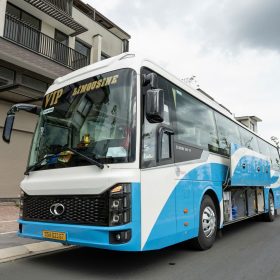 xe 29 chỗ
 xe 45 chỗ
 xe 4 chỗ
Join a SMART Recovery meeting and start your recovery journey today. Each winning team receives a custom Cheez-It care package delivered to its campus. The 2025 season marks the first year the FWAA has presented the award under its new name, the Cheez-It Crunch Time Play of the Week, spotlighting the single most decisive play from the weekend’s games. These evolving practices shaped our cities as we responded to the COVID-19 pandemic and are key to our long-term recovery. Create your free account or sign in to continue your search revery play login What a brilliant concept , these should be repilicated all over Britain
Will Duo Mobile accounts be saved on my device if I delete the app?
Newsletter-only drops do occur, but the safest route is always the Promotions page inside your account. Google Drive users can view that Duo Mobile is using their Drive to store data and the size of that backup but cannot interact with that file. ICloud does not provide a way for users to view the backup file.
- Among these potential miRNA targets, the predicted miR-71–targeting sites in the 3′UTRs of age-1 and unc-31 are conserved between C.
- Furthermore, miR-71 plays a prominent role in developmental recovery from L1 diapause partly through repressing the expression of certain heterochronic genes.
- To use Instant Restore you must have previously backed up your device with iCloud (with iCloud Keychain on) or an encrypted iTunes or Finder backup.
- S1A indicated a dominant role of intestinal miRNAs in regulating L1 starvation survival.
- Third-party accounts will also be restored if third-party backup was enabled on the old device.
- Member States can also amend their plan if they can demonstrate that objective circumstances render the implementation of certain milestones and targets unfeasible.
We further examined worms recovering from 4 d of L1 starvation and found that around 90% of the mir-71(lf) mutants displayed retarded vulval precursor cell (VPC) division, compared with less than 5% in wild type (Fig. 4A). We found that the 3′UTRs of several genes of the InsR pathway, including unc-31, age-1, pdk-1, akt-2, and sgk-1, contain predicted miR-71 targeting sites (as predicted by TargetScan and mirWIP). (H and I) Fluorescence images (H) and statistical data (I) showing that the M cell diveded in fed animals but remained undivided in 4-, 7-, or 11-d–starved L1 wild-type and mir-71(lf) worms. (E) Fluorescence and DIC images showing that the unc-31 3′UTR reporter was repressed in mir-71(+)worms (2/2 transgenic lines) but not in mir-71(lf) worms (4/4 transgenic lines). We found that the poor survival rate of daf-16(mu86)(lf) was further decreased by mir-71(lf) (Fig. 2C), consistent with the notion that a portion of miR-71 activities regulate genes that act in parallel to UNC-31–mediated InsR/PI3K signaling for long-term survival during L1 diapause. Mutating miR-71 drastically reduces the survival rate of animals in L1 diapause, and the effect can be suppressed by mutations of insulin receptor pathway genes age-1 and unc-31.
(E) DIC images showing that hbl-1(RNAi) caused precocious VPC divisions in late L2/early L3 in both wild-type and mir-71(lf) worms recovered from 4 d of L1 starvation. Note that the daf-16(lf) worms recovering from 3 d of L1 starvation displayed a ∼12-h delay in overall development and that the mir-71(lf); daf-16(lf) double mutants displayed an ∼24-h delay. (C) Bar graph showing that the delayed VPC timing defects of mir-71(lf) worms was suppressed by an unc-31(lf) mutation and partially suppressed by an age-1(rf) mutation. In worms that recovered from 4 d of L1 starvation, we also found that a significant portion of the mir-71(lf) mutants displayed egg-laying defects and overproliferating or precociously reflexed gonads.
What is SMART Recovery?
We recommend that incorporating trait-based recovery dynamics is essential for predicting ecosystem stability under compound climate extremes. Biomass recovery was similar across growth strategies, suggesting that growth-related differences play a minimal role in short-term recovery; however, early regrowth was characterised by contrasting trait shifts. Solidago canadensis exhibited high tolerance to heat and drought, with early biomass and trait recovery, indicating potential for dominance under climate extremes. Biomass fully recovered within one month in both growth strategies, but leaf traits showed transient shifts, over-recovery in SLA and under-recovery in LDMC, likely reflecting production of new leaf tissues.
(B) The severely reduced survival rate of the mir-71(lf) mutant was suppressed by a null allele of unc-31(e928). The effect observed in ain-1(lf) mutants is likely the consequence of the combined effects of attenuating functions of these individual miRNAs. Previous studies indicate that the InsR pathway plays a dominant role in regulating L1 starvation survival and that reducing the activity of the insulin receptor daf-2, the PI3Kinase age-1, or the upstream regulator unc-31 results in increased L1 starvation survival rate (2, 3). (B) Survival rate of single and double mutants to indicate the functional relationship between ain-1 and age-1.
Enabling Duo Restore (Updated)
- The funding amounts shown reflect the initial cost estimates included in the national recovery and resilience plans.
- These results compelled us to examine specific interactions between individual miRNAs and their targets to gain mechanistic insights.
- As pointed out above, multiple miRNAs in addition to miR-71 and the let-7 family miRNAs have roles in L1 diapause, and they may regulate the expression of many diverse targets that may include, but are not limited to, factors involved in UNC-31–InsR-signaling activities.
- To use Instant Restore, you must have previously included Duo Mobile app data in your Android device backup.
- Individual GFP reporter constructs for candidate genes (4 ng/μL) and the mCherry internal control plasmid (4 ng/μL) were mixed with unc-119 rescuing plasmid (20 ng/μL) and pBluescript KS+ (72 ng/μL) and coinjected into unc-119(ed3) and mir-71(n4115); unc-119(ed3) worms following standard protocols (32).
Whereas the vulva of wild-type worms developed into the pyramidal stage (81 of 82 worms), the P6.p of mir-71(n4115, lf) mutant worms divided only once (83 of 89 worms). The computation-based prediction that age-1 and pdk-1 are potential targets of miR-71 was also reported in a recent study focusing on miRNA functions in aging where the mRNA level of pdk-1 was shown to be up-regulated in mir-71 worms (14). (C) Fluorescence and differential interference contrast (DIC) images showing that the age-1 3′UTR reporter was repressed in mir-71(+) worms (3/4 transgenic lines) but not in mir-71(lf) worms (4/4 transgenic lines). The transcript level of unc-31 was increased in mir-71(lf) worms, compared with that of wild-type controls that were normalized to the value of 1. MiR-71 represses the expression of age-1 and unc-31 through the actions on their 3′UTR, but miR-71 is not required for arresting M cell division during L1 diapause.
S1A indicated a dominant role of intestinal miRNAs in regulating L1 starvation survival. We used a dual-color 3′UTR reporter system (18) to test the computational, prediction-based hypothesis that the 3′UTRs of age-1 and unc-31 are directly regulated by miR-71 (Fig. 3B and Materials and Methods). Among these potential miRNA targets, the predicted miR-71–targeting sites in the 3′UTRs of age-1 and unc-31 are conserved between C.
Although the complete removal of miRNA functions causes embryonic lethality or infertility in worms, a partial disruption of overall miRNA functions by mutating either ain-1 or ain-2 provides an effective way to investigate miRNA functions (16, 17). However, we found that the reporter transgene with the lin-42 3′UTR was significantly repressed in wild-type worms, but derepressed in the mir-71(lf) worms (Fig. 4 H and I). This is consistent with hbl-1 being one of the downstream targets of miR-71, although this modest effect alone is not expected to account for the vulval developmental phenotype in mir-71 mutant. In starved L1 worms, we detected only a slight increase in the mRNA level of hbl-1 in mir-71 mutants compared with that in wild type (∼10%), which may not be biologically significant. In contrast, the mir-71(lf) mutant worms recovering on hbl-1(RNAi) displayed precocious VPC divisions similar to that seen in wild type (Fig. 4E).
